
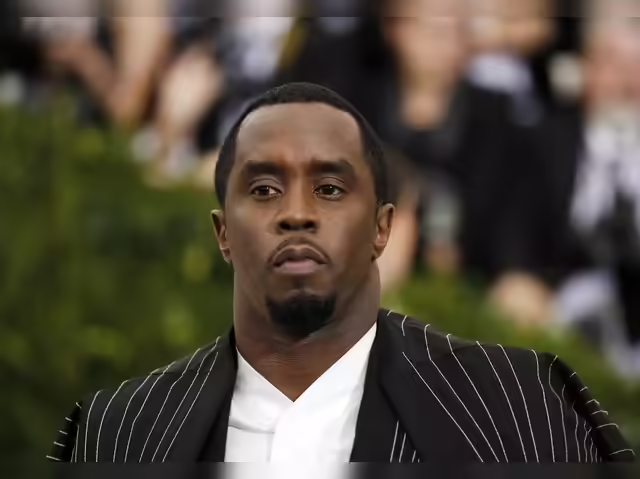
Have you ever wondered how a single legal case can suddenly place an individual into the global spotlight overnight? That is exactly what happened with Joi Dickerson-Neal, a woman whose name became widely discussed after she brought forward serious legal allegations that attracted major media attention and public debate.
Her story is not just about one lawsuit. Instead, it reflects broader conversations about accountability, consent, media influence, and how legal claims involving public figures are handled in today’s digital age. As the discussion unfolded, it sparked reactions far beyond the courtroom.
In this article, we will break down who Joi Dickerson-Neal is, the background of the case associated with her name, the public reaction, and the larger cultural and legal implications connected to her story.
Who is Joi Dickerson-Neal?
Joi Dickerson-Neal is a woman who became publicly known due to legal proceedings that brought her name into mainstream media coverage. Before this attention, she was not a widely recognized public figure, but her involvement in a high-profile lawsuit changed that almost instantly.
From what has been reported in public records and media discussions, she has largely been described in connection with legal claims rather than a traditional celebrity or entertainment career. This is an important distinction because her visibility comes primarily from the courtroom rather than the public stage.
Her case demonstrates how individuals outside the entertainment or political world can suddenly become central figures in major public debates. In today’s media environment, even a single filing can transform a private citizen into a widely searched name.
Another key aspect of her public identity is the privacy tension surrounding her story. While her name is known due to legal filings, many personal details about her life remain limited in public discourse, which is common in sensitive civil cases.
The Legal Allegations and Case Background
The most widely discussed aspect of Joi Dickerson-Neal’s public attention comes from legal allegations that she filed in civil court. These claims involve serious accusations made in a lawsuit against a well-known entertainment figure, which immediately drew widespread media coverage.
According to publicly available reporting, the lawsuit centers on alleged events that reportedly occurred in the past, with claims being formally brought forward many years later. This time gap has been a major point of discussion in legal and public commentary, as delayed reporting is not uncommon in cases involving sensitive allegations.
In civil lawsuits like this one, the burden of proof is different from criminal cases. Instead of “beyond a reasonable doubt,” civil claims are evaluated based on a “preponderance of evidence.” This legal standard often becomes a focal point in public debates when high-profile individuals are involved.
Another important detail is that such cases often involve intense legal scrutiny from both sides. Defendants typically deny allegations, while plaintiffs seek to present supporting evidence and testimony. As a result, these cases can become lengthy, complex, and heavily analyzed by both legal experts and media commentators.
Public Reaction and Media Coverage
Once Joi Dickerson-Neal’s name entered the public space, media coverage expanded rapidly. News outlets, blogs, and social media users began discussing the case in detail, often interpreting legal filings in different ways depending on their perspective.
One major pattern in public reaction was polarization. Some individuals expressed support for her decision to come forward, viewing it as part of a broader movement encouraging people to speak about past experiences. Others were more skeptical, emphasizing the importance of legal evidence and due process.
Social media amplified these reactions significantly. Platforms like X (formerly Twitter), Instagram, and TikTok became spaces where users debated the case, often reducing complex legal matters into short opinions or viral posts. This made the story spread quickly, but not always accurately.
At the same time, traditional media outlets attempted to provide more structured reporting. However, even professional coverage varied in tone, with some focusing on legal facts and others highlighting the cultural implications of the case. This mix contributed to widespread public curiosity and ongoing discussion.
Impact on Entertainment Industry Discussions
Cases like the one involving Joi Dickerson-Neal often extend beyond the courtroom and into the entertainment industry itself. Her lawsuit became part of a broader conversation about accountability within high-profile industries, particularly music and film.
One key impact has been the renewed focus on how allegations involving celebrities are handled publicly. Entertainment companies, management teams, and public relations professionals often find themselves responding quickly to such claims due to reputational risk.
Additionally, the case contributed to ongoing debates about how power dynamics operate in the entertainment world. Many discussions centered on whether individuals with less influence face additional challenges when bringing forward allegations involving powerful figures.
It also highlighted how quickly narratives can form in the digital age. Once a case becomes public, it can influence public perception of not just the individuals involved, but also entire industries. This creates pressure on organizations to respond carefully and transparently.
Legal and Cultural Context Behind the Case
To fully understand the significance of Joi Dickerson-Neal’s case, it is important to look at the legal and cultural environment surrounding it. Over the past decade, there has been increasing attention on how historical allegations are treated in civil courts.
One major factor is the statute of limitations, which varies depending on jurisdiction and the nature of the claim. In some cases, laws have been updated to allow older claims to be filed under specific circumstances. This has led to more lawsuits involving events that allegedly occurred many years earlier.
Culturally, movements advocating for survivors of misconduct have also influenced public awareness. These movements have encouraged more people to come forward and share their experiences, which in turn has shaped how the public interprets similar cases.
At the same time, there is an ongoing legal balance between believing allegations and ensuring fair trials. Courts must evaluate evidence carefully, while public opinion often forms much faster based on media headlines and social media discussions.
Privacy, Social Media, and Public Scrutiny
One of the most complex aspects of Joi Dickerson-Neal’s situation is the level of public scrutiny she has faced. Once her name became widely known, discussions about her case spread quickly across the internet, often without full context.
Social media plays a major role in this dynamic. Information can be shared instantly, but it is not always verified. As a result, individuals involved in legal disputes can experience both support and criticism from large online audiences.
Privacy is another major concern. Even though lawsuits require some level of public documentation, the individuals involved may not have chosen public exposure. This creates tension between transparency in legal systems and personal privacy rights.
In many cases like this, media attention can have long-lasting effects. Once a name becomes associated with a high-profile legal matter, it often remains part of online search results and public discussion for years, regardless of the case outcome.
What This Case Means Going Forward
The case involving Joi Dickerson-Neal reflects broader societal changes in how legal allegations are discussed and interpreted. It shows how quickly personal legal matters can become global talking points in the digital era.
One major takeaway is the growing intersection between law and media. Court filings are no longer limited to legal professionals—they are now widely analyzed by journalists, influencers, and everyday social media users. This changes how narratives develop and spread.
Another important implication is the continued debate about fairness and accountability. Cases like this often lead to discussions about how to balance support for individuals who come forward with the need for fair legal processes for all parties involved.
It also highlights how public attention can shape the experience of those involved in legal disputes. Even before a case reaches a conclusion, public opinion may already be strongly formed, influencing how the story is perceived long-term.
Conclusion
The story of Joi Dickerson-Neal is more than just a legal headline—it is a reflection of modern society’s relationship with law, media, and public opinion. Her case demonstrates how quickly private legal matters can become widely discussed topics across the world.
While the legal process continues to focus on evidence and due process, the public conversation around her story highlights deeper cultural questions about accountability, privacy, and the power of media narratives.
Ultimately, her case serves as an example of how complex and multi-layered high-profile legal disputes can be. It reminds us that behind every headline is a real person navigating a very public and often overwhelming situation.







Leave a Reply