
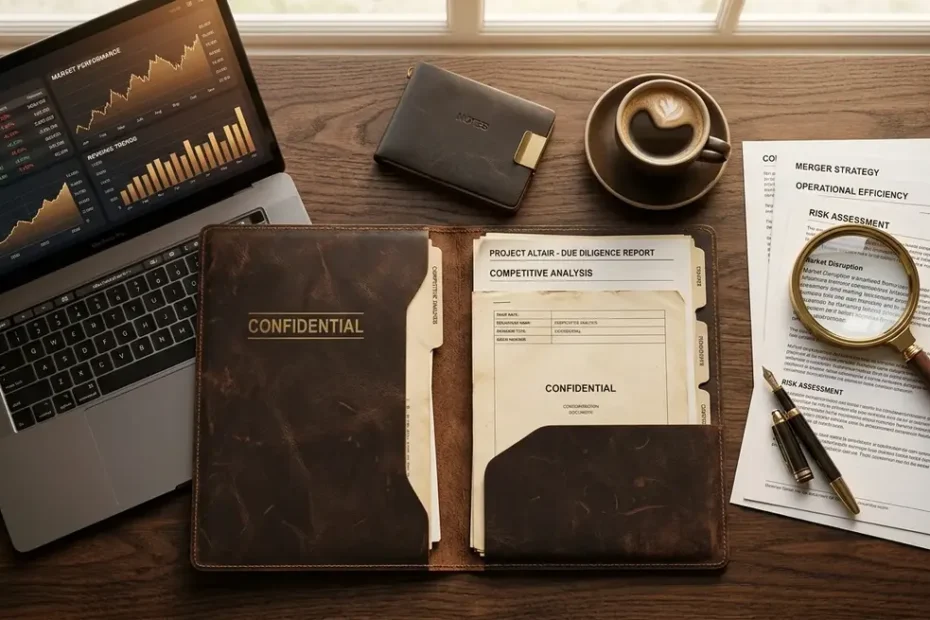
In today’s competitive business environment, making informed decisions is essential for long-term success. Whether a company is planning to invest in another business, establish a partnership, acquire a competitor, or enter a new market, understanding the target organization is a critical first step. This is where a research dossier for target company becomes valuable. It brings together important information about a business in one organized document, helping decision-makers understand its strengths, weaknesses, opportunities, risks, and overall market position.
A well-prepared research dossier allows businesses to move beyond assumptions and base their decisions on reliable information. Instead of searching through scattered reports, websites, financial statements, and industry publications, professionals can use a structured document to evaluate the company more efficiently.
As businesses increasingly rely on data-driven strategies, company research has become more important than ever. A detailed dossier can support strategic planning, investment decisions, competitive analysis, mergers and acquisitions, sales development, and partnership evaluations.
This article explains what a research dossier is, why it matters, what information it should contain, and how organizations can create one effectively.
What Is a Research Dossier for Target Company?
A research dossier for target company is a comprehensive document that collects and organizes relevant information about a specific business. Its primary purpose is to help individuals and organizations understand the target company’s operations, financial condition, leadership, market presence, competitive environment, and potential business value.
The word “dossier” refers to a collection of documents or information assembled for a particular purpose. In a business context, it provides a structured overview of a company based on available evidence.
For example, an investment firm considering a potential acquisition may prepare a dossier covering the company’s annual revenue, profitability, ownership structure, customer base, intellectual property, and legal history. Similarly, a sales team may investigate a prospective customer to understand its business priorities, purchasing behavior, and organizational structure.
The exact contents depend on the research objective. A dossier prepared for a merger will generally require more extensive financial and legal analysis than one created for routine sales prospecting.
Regardless of its purpose, the document should be accurate, relevant, clearly organized, and supported by trustworthy sources.
Why Is a Company Research Dossier Important?
Business decisions often involve uncertainty. An organization may appear successful from the outside while facing financial difficulties, operational inefficiencies, or competitive pressure behind the scenes. A research dossier helps uncover these details before a decision is made.
1. Supports Better Business Decisions
A detailed dossier gives decision-makers a stronger understanding of the company they are evaluating. It allows them to compare available evidence, identify potential problems, and consider different scenarios before committing resources.
For example, a company considering a strategic partnership can use research findings to assess whether the potential partner has the operational capacity, financial stability, and market reputation needed to support the relationship.
This preparation reduces dependence on assumptions and helps teams make more informed choices.
2. Identifies Potential Risks
Every business relationship carries some degree of risk. Financial instability, regulatory violations, unresolved lawsuits, poor management practices, or excessive dependence on a small number of customers can create significant challenges.
A research dossier helps organize these concerns so that they can be investigated further.
Identifying a risk does not automatically mean the target company should be rejected. Instead, the information helps decision-makers understand the potential consequences and determine whether additional safeguards or investigations are necessary.
3. Improves Competitive Intelligence
Companies need to understand their competitors to remain competitive. A dossier can reveal information about a rival’s products, pricing strategies, market positioning, customer segments, and expansion plans.
This knowledge helps businesses identify gaps in the market and develop strategies that respond to changing customer expectations.
However, competitive research should rely on lawful, publicly available information and authorized sources rather than confidential data obtained without permission.
4. Saves Time and Resources
Research becomes inefficient when information is scattered across multiple documents and platforms. A structured dossier creates a central reference point for the team.
Instead of repeatedly searching for the same facts, employees can consult the document and focus on analyzing the information. The dossier can also help different departments work from a consistent understanding of the target company.
Key Components of a Research Dossier
A useful dossier includes several sections that collectively provide a complete picture of the target business. The level of detail should match the importance and complexity of the decision.
1. Company Overview
The company overview introduces the target organization and establishes its basic identity.
This section typically includes:
- Official company name and any recognized trading names
- Year of establishment
- Headquarters and major operating locations
- Industry and primary business activities
- Main products or services
- Ownership structure
- Company size and approximate employee count
- Geographic markets served
This information helps readers understand what the company does and how it operates.
It is important to distinguish verified facts from estimates. For instance, an employee count reported by a company directory may differ from the latest figure published by the organization itself. The dossier should identify the source and date of information whenever possible.
2. Financial Performance
Financial information is particularly important when evaluating a company for investment, acquisition, lending, or a major commercial partnership.
Depending on availability, this section may examine revenue, operating expenses, gross profit, net income, cash flow, debt, and major financial trends.
Rather than focusing on a single reporting period, researchers should examine several years of financial performance when reliable records are available. This makes it easier to identify growth patterns, declining profitability, unusual expenses, and changes in financial stability.
For publicly traded companies, annual reports, quarterly filings, and audited financial statements can provide useful evidence. Private companies may disclose less information, making authorized financial documents and direct verification especially important.
Researchers should avoid treating revenue growth as proof of financial health. A company can increase sales while experiencing falling margins, rising debt, or cash flow problems.
3. Leadership and Management
The quality of leadership can influence a company’s strategy, culture, performance, and ability to respond to challenges.
This section identifies key executives, founders, directors, and other relevant decision-makers. It may summarize their professional experience, responsibilities, and publicly documented leadership history.
Researchers can also investigate management stability and major organizational changes. Frequent executive departures, unclear responsibilities, or substantial restructuring may deserve further examination, although none of these factors automatically indicates poor management.
The objective is to understand how the company is led and whether its leadership structure appears suitable for its business objectives.
4. Products and Services
A clear understanding of a company’s offerings helps researchers assess its value proposition and commercial potential.
This section should explain the company’s primary products or services, the problems they solve, their intended customers, and the features that distinguish them from competing alternatives.
It can also examine product development, service quality, pricing models, distribution channels, and customer support.
For technology companies, intellectual property and product innovation may be especially important. For service providers, reputation, employee expertise, and customer retention may carry greater weight.
The analysis should connect product information to actual market demand rather than simply repeating promotional claims.
5. Market Position and Industry Analysis
No company operates independently of its industry. Economic conditions, consumer behavior, regulation, technological change, and competitor activity can all affect performance.
The market analysis section examines the target company’s position within its broader business environment.
Researchers should identify major competitors, relevant market trends, barriers to entry, customer preferences, and potential sources of future growth.
A SWOT analysis can help summarize the findings:
- Strengths: Internal advantages, such as a recognized brand, efficient operations, or proprietary technology.
- Weaknesses: Internal limitations, such as a narrow product range or dependence on one market.
- Opportunities: External developments that could support growth, including new customer segments or emerging technologies.
- Threats: External pressures, such as stronger competition, regulatory changes, or economic uncertainty.
The value of this analysis depends on the quality of the evidence behind each point. General statements should be replaced with specific observations whenever possible.
6. Customers and Business Relationships
Customer information can reveal how stable and diversified a company’s revenue sources may be.
This section examines the target company’s primary customer segments, publicly disclosed major clients, distribution partners, suppliers, and other important commercial relationships.
Researchers may investigate customer concentration, contract duration, renewal patterns, and dependence on key suppliers when this information is available through authorized sources.
For example, a business that relies heavily on one major customer may face significant pressure if that customer changes suppliers. Likewise, a manufacturer that depends on a single supplier for a critical component may be vulnerable to disruptions.
Customer reviews and testimonials can provide additional context, but they should not be treated as conclusive evidence of overall satisfaction or service quality.
7. Legal and Regulatory Background
Legal and regulatory research is an essential component of many company evaluations, particularly for acquisitions, investments, and high-value partnerships.
This section may cover corporate registration, licensing requirements, publicly documented litigation, regulatory actions, relevant compliance obligations, and significant legal disputes.
The research should focus on reliable records and clearly distinguish allegations from proven findings. A lawsuit, for example, does not necessarily establish wrongdoing.
Because legal requirements vary by jurisdiction and industry, complex matters should be reviewed by qualified legal professionals.
How to Create a Research Dossier for Target Company
Creating an effective dossier requires a systematic process. The following steps help researchers produce a useful document without collecting unnecessary information.
Define the Research Objective
Begin by determining why the company is being investigated.
Is the goal to assess a potential acquisition, identify a sales opportunity, evaluate a supplier, understand a competitor, or consider an investment?
The objective determines which information deserves the most attention. Without a clear purpose, researchers may collect large amounts of information that do not contribute to the final decision.
Write down the key questions the dossier must answer before beginning the research.
Identify Reliable Information Sources
The quality of the dossier depends heavily on the reliability of its sources.
Useful sources may include official company websites, annual reports, stock exchange filings, government business registries, regulatory announcements, industry publications, reputable news organizations, and authorized company disclosures.
Public professional profiles may also help researchers understand leadership responsibilities and organizational structure.
Whenever possible, verify important claims through more than one independent source. Company marketing materials can explain how an organization presents itself, but independent evidence may be necessary to evaluate those claims objectively.
Collect and Organize the Data
Once the research objective and sources are established, gather the relevant information systematically.
Create separate sections for company background, financial performance, management, products, market position, customers, and legal considerations.
Record the publication date, source, and verification status of important facts. This makes the document easier to update and allows readers to distinguish current information from historical details.
Avoid collecting sensitive personal information that is not necessary for the business purpose.
Analyze the Findings
Collecting facts is only part of the process. The real value comes from understanding what those facts mean.
For example, a company may report increasing revenue while its operating margins decline. This combination could suggest rising costs, aggressive pricing, or changes in its product mix. Additional evidence would be needed to determine the actual cause.
Researchers should look for patterns, inconsistencies, warning signs, and opportunities.
It is also useful to separate confirmed facts from estimates, interpretations, and unresolved questions. This prevents assumptions from being presented as established conclusions.
Assess Risks and Opportunities
After analyzing the information, identify the most important risks and potential benefits.
Consider financial stability, market competition, operational capacity, leadership quality, regulatory exposure, and the strategic fit between the target company and the organization conducting the research.
Rank findings according to their potential impact and likelihood. A minor issue that is easy to resolve should not receive the same attention as a major financial or legal concern.
For high-stakes decisions, identify which issues require further investigation before proceeding.
Prepare the Final Document
The final dossier should be easy to navigate and useful to its intended audience.
Start with an executive summary that explains the target company’s business model, major findings, principal risks, and overall assessment. Follow it with detailed sections supporting the summary.
Use clear headings, concise explanations, relevant tables, and consistent terminology. Include source references within the document so that readers can verify important claims.
The final document should not merely repeat everything discovered during research. It should emphasize the information that matters most to the decision.
Common Mistakes to Avoid
Even experienced researchers can produce weak dossiers when they overlook important details.
One common mistake is relying too heavily on information published by the target company. Official sources are valuable, but promotional statements should be evaluated alongside independent evidence.
Another problem is using outdated information. Leadership, financial results, ownership, and market conditions can change quickly. Researchers should check dates carefully and update critical information before the dossier is used.
A third mistake is confusing correlation with causation. A decline in sales and a leadership change may occur during the same period, but that does not prove one caused the other.
Researchers should also avoid unsupported conclusions, excessive detail, and unverified online rumors. Every major conclusion should be connected to relevant evidence, with uncertainty acknowledged where necessary.
Finally, a dossier should be treated as a living document rather than a permanent record. Significant developments may require updates, especially when a transaction or business relationship is still under consideration.
How Technology Improves Company Research
Modern research tools can make the dossier preparation process faster and more organized.
Spreadsheets help researchers compare financial figures, track sources, and identify changes over time. Document management systems keep research materials organized, while analytical software can support financial comparisons and market assessments.
Artificial intelligence can assist with summarizing lengthy reports, extracting relevant information, categorizing documents, and identifying questions that deserve further investigation.
However, automated tools can produce inaccurate summaries or misinterpret context. Important facts should therefore be checked against original documents, particularly when financial, legal, or investment decisions are involved.
Data security also matters. Confidential financial records, internal business documents, and personal information should only be processed through systems authorized for that purpose.
Technology is most useful when it supports sound research practices rather than replacing critical thinking and verification.
Who Can Benefit from a Research Dossier?
A research dossier can serve a wide range of professionals and organizations.
Investors can use it to understand a company’s business model, financial performance, growth potential, and major risks before committing capital.
Business development teams can research potential partners and customers, identify decision-makers, and develop more relevant commercial proposals.
Mergers and acquisitions professionals can use a dossier as an initial assessment before conducting formal due diligence. The dossier does not replace detailed legal, financial, tax, and operational investigations.
Marketing teams can analyze competitors, identify market gaps, and better understand how other organizations position their products and services.
Procurement departments can assess suppliers’ capabilities, business continuity risks, and publicly available compliance information before entering into significant contracts.
For each group, the document should be tailored to the questions that matter most to its work.
Best Practices for Maintaining an Accurate Dossier
A high-quality dossier requires more than a thorough initial investigation. It also needs clear standards for accuracy, confidentiality, and ongoing maintenance.
First, establish a consistent format so that different target companies can be compared fairly. Second, record sources and dates for material findings. Third, prioritize reliable evidence over unsupported commentary. Fourth, review important information whenever new developments could affect the decision.
It is also helpful to identify gaps in the available evidence. If a private company does not disclose detailed financial information, the dossier should state that limitation rather than imply that the company’s financial position has been fully assessed.
Finally, restrict access to confidential research materials when appropriate and comply with applicable privacy, data protection, and information security requirements.
These practices improve the dossier’s credibility and make it more useful to decision-makers over time.
Conclusion
A research dossier for target company is a valuable tool for understanding businesses before making important strategic decisions. By bringing together company background, financial performance, leadership information, products, market analysis, customer relationships, and legal considerations, it provides a structured foundation for evaluating opportunities and risks.
The most effective dossiers are built around a clear objective, supported by reliable evidence, and organized for practical use. They distinguish verified facts from assumptions, acknowledge information gaps, and focus on findings that could influence the final decision.
Whether the goal is to evaluate a potential investment, research a competitor, select a supplier, or explore a strategic partnership, a well-prepared dossier can improve preparation and reduce avoidable uncertainty.
Ultimately, successful company research is not about collecting the largest possible amount of information. It is about finding the right information, understanding its significance, and using it responsibly to make better business decisions.







Leave a Reply