
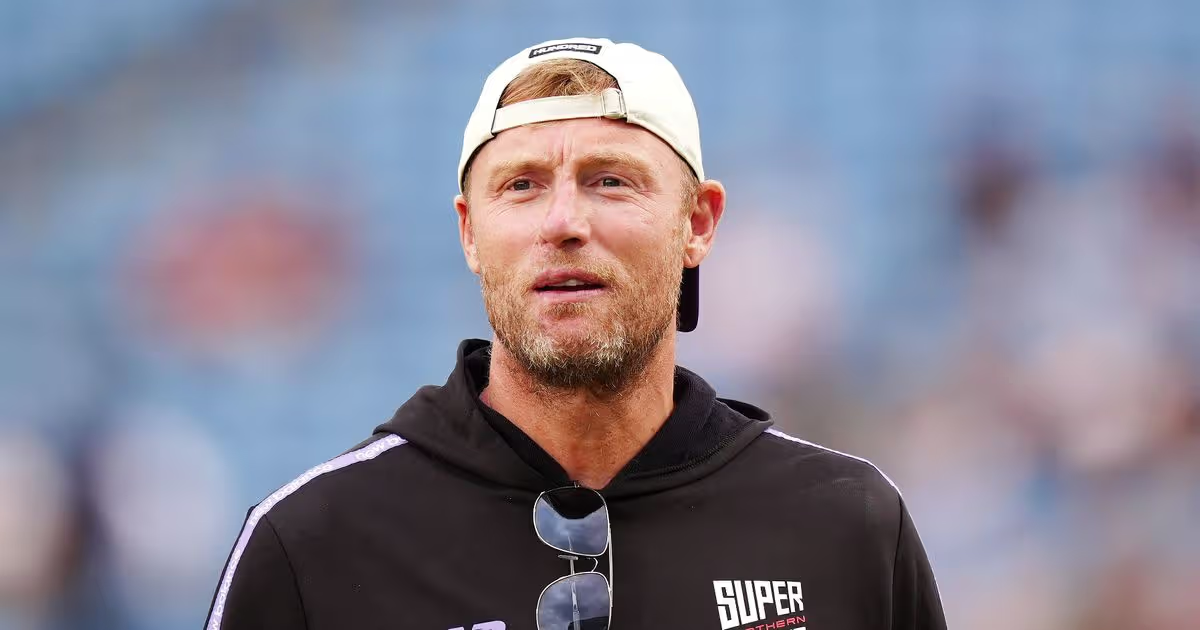
A Shocking Moment That Left Fans Asking Questions
When news broke about the Flintoff crash, people across the world paused and asked the same question: how did this happen to someone so experienced and confident behind the wheel? The incident involving Andrew Flintoff wasn’t just another celebrity accident. It quickly turned into a serious conversation about safety, responsibility, and the risks involved in entertainment television.
For many, Flintoff is not just a former cricketer. He is a personality who successfully transitioned from the cricket field into the world of broadcasting. His presence on Top Gear added humor, relatability, and a sense of fearless adventure. That is exactly why the crash hit differently. It wasn’t just an accident. It felt personal to viewers who had followed his journey for years.
In this article, we will break down the Flintoff crash in detail. We will explore what led up to the incident, what happened during the crash, and what came afterward. Along the way, we will also look at broader themes like safety in television productions and how this event may shape the future of such shows.
Who Is Andrew Flintoff and Why His Story Matters
Andrew Flintoff, often affectionately called “Freddie,” built his reputation as one of England’s most charismatic and powerful cricketers. His career highlights include playing a key role in England’s victory in the 2005 Ashes series. That alone made him a national hero. However, his personality extended beyond cricket, and he soon became a household name in entertainment as well.
After retiring from professional cricket, Flintoff explored several opportunities in media. His natural humor and down-to-earth attitude made him perfect for television. Eventually, he became one of the hosts of Top Gear, a show known for its mix of cars, challenges, and high-energy stunts.
This transition from sports to television is important when discussing the crash. Flintoff was not just a random participant. He was someone who had experience with high-pressure situations, physical challenges, and even risk-taking. That background shaped how audiences perceived the accident. Many assumed he could handle extreme conditions. That assumption, however, came into question after the crash.
Another key point is how Flintoff’s personality influenced the show itself. He brought a sense of unpredictability and boldness. While that made for entertaining television, it also raised concerns about whether the show sometimes pushed boundaries too far.
The Day of the Flintoff Crash: What Happened
The Flintoff crash occurred during filming for Top Gear at a test track. Reports suggest that Flintoff was driving a three-wheeled vehicle at the time. Unlike standard cars, such vehicles behave differently, especially when it comes to balance and stability.
During the run, the vehicle reportedly flipped. The conditions were not extreme in terms of weather, which made the accident even more surprising. It wasn’t a storm or slippery road that caused the crash. Instead, it appeared to be a combination of speed, vehicle design, and possibly unexpected handling behavior.
Witnesses described the moment as sudden. One moment everything seemed under control, and the next moment the vehicle had overturned. Emergency services were quickly called to the scene, and filming was halted immediately.
The seriousness of the incident became clear when Flintoff was taken to the hospital. Initial reports suggested facial injuries and broken ribs. While he was conscious, the injuries were significant enough to raise alarm among fans and colleagues alike.
What makes this part of the story particularly important is how quickly things can go wrong in controlled environments. Even though the show operates under strict safety guidelines, the unpredictable nature of vehicles means there is always a level of risk involved.
Understanding the Risks Behind Television Stunts
To fully grasp the Flintoff crash, it helps to understand the environment in which it occurred. Shows like Top Gear are designed to entertain, but they often rely on real stunts rather than computer-generated effects.
This commitment to authenticity is part of what makes the show so popular. Viewers appreciate seeing real reactions and real consequences. However, this also means that presenters are exposed to genuine risks.
Vehicles used in such shows are not always standard road cars. They can be modified or experimental. In Flintoff’s case, the three-wheeled vehicle added an extra layer of unpredictability. These vehicles are known for their unique handling characteristics, which can catch even experienced drivers off guard.
Another factor is the pressure to deliver exciting content. While safety is always a priority, there is often an unspoken expectation to push limits. This balance between entertainment and safety is delicate, and the Flintoff crash highlighted just how fragile it can be.
It also sparked discussions about whether more precautions should be taken. Should certain stunts be avoided altogether? Or should additional safety measures be introduced? These are questions that the industry continues to grapple with.
The Immediate Aftermath and Public Reaction
Following the Flintoff crash, the response was swift and intense. Fans, media outlets, and fellow celebrities expressed concern and support. Social media platforms were filled with messages wishing him a speedy recovery.
The BBC released statements confirming the incident and emphasizing their commitment to safety. They also confirmed that production on Top Gear would be paused while the situation was reviewed.
This pause was significant. It showed that the network recognized the seriousness of the incident and was willing to take a step back. In an industry where schedules are tight and delays can be costly, this decision spoke volumes.
Public reaction was not just about concern for Flintoff. It also included criticism. Some viewers questioned whether the show had become too focused on extreme stunts. Others defended it, arguing that risk is part of what makes the show exciting.
The debate highlighted a broader issue: how much risk is acceptable in entertainment? There is no simple answer, but the Flintoff crash forced people to confront the question directly.
Flintoff’s Recovery and Personal Impact
Recovery from such an incident is not just physical. While Flintoff’s injuries were serious, the emotional and psychological impact should not be overlooked.
Reports indicated that he took time away from the public eye to recover. This period allowed him to focus on healing without the pressure of media attention. It also gave him time to reflect on the experience.
For someone like Flintoff, who is known for his resilience, this phase was likely challenging. Athletes and performers often struggle with the idea of vulnerability. The crash forced him to confront that reality.
There is also the question of whether he will return to high-risk activities. While nothing is impossible, such experiences often lead individuals to reassess their priorities. Family, health, and long-term well-being tend to take on greater importance.
From a broader perspective, his recovery journey serves as a reminder that accidents can have lasting effects. They are not just moments in time. They shape decisions and perspectives moving forward.
How the Flintoff Crash Changed Top Gear
The Flintoff crash had a noticeable impact on Top Gear. Production changes were inevitable, and the future of the show came into question.
One of the most immediate effects was the halt in filming. This pause allowed producers to reassess safety protocols. It also gave them time to consider the direction of the show.
There were discussions about whether the format should change. Should the show focus more on storytelling and less on risky stunts? Or should it continue as it always has, but with enhanced safety measures?
The involvement of the BBC added another layer to the decision-making process. As a public broadcaster, the BBC has a responsibility to ensure that its productions meet high safety standards.
Ultimately, the Flintoff crash may lead to a more cautious approach. While the essence of the show may remain the same, the way it is executed could evolve.
Lessons Learned from the Incident
The Flintoff crash offers several important lessons, both for the television industry and for viewers.
First, it highlights the importance of safety. Even experienced individuals can encounter unexpected situations. This reinforces the need for constant vigilance and improvement in safety protocols.
Second, it underscores the risks associated with certain types of vehicles. Three-wheeled vehicles, in particular, require careful handling. Their unique design can lead to instability under certain conditions.
Third, it raises awareness about the pressures of entertainment. The desire to create engaging content can sometimes lead to risky decisions. Finding the right balance is crucial.
Finally, it reminds us of the human side of such incidents. Behind every headline is a person dealing with real consequences. This perspective often gets lost in the rush to report news.
The Broader Impact on Television and Media
Beyond Top Gear, the Flintoff crash has implications for the entire television industry. It has prompted producers and networks to re-evaluate their approach to risk.
Other shows that involve stunts or physical challenges may also take note. The incident serves as a cautionary tale. It shows that even well-established productions are not immune to accidents.
Insurance policies, safety guidelines, and training procedures are likely to come under scrutiny. Networks may invest more in technology and equipment to reduce risks.
There is also the possibility of a shift in audience expectations. Viewers may become more aware of the dangers involved in certain types of content. This awareness could influence what they choose to watch.
At the same time, the demand for exciting content is unlikely to disappear. This creates a challenge for producers. They must find ways to deliver entertainment without compromising safety.
Conclusion:
The Flintoff crash is more than just an isolated incident. It is a story that touches on multiple themes, including risk, responsibility, and resilience.
For fans of Andrew Flintoff, it is a reminder of his humanity. Despite his achievements and confidence, he is not immune to accidents.
For the television industry, it is a wake-up call. It highlights the need for continuous improvement in safety practices. It also raises questions about the balance between entertainment and risk.
For viewers, it offers an opportunity to reflect. The next time we watch a high-speed stunt or a daring challenge, we may think twice about what goes into making it possible.
In the end, the Flintoff crash is a powerful example of how a single moment can spark widespread discussion and change. It shows that even in the world of entertainment, real-life consequences are always present.




Leave a Reply